
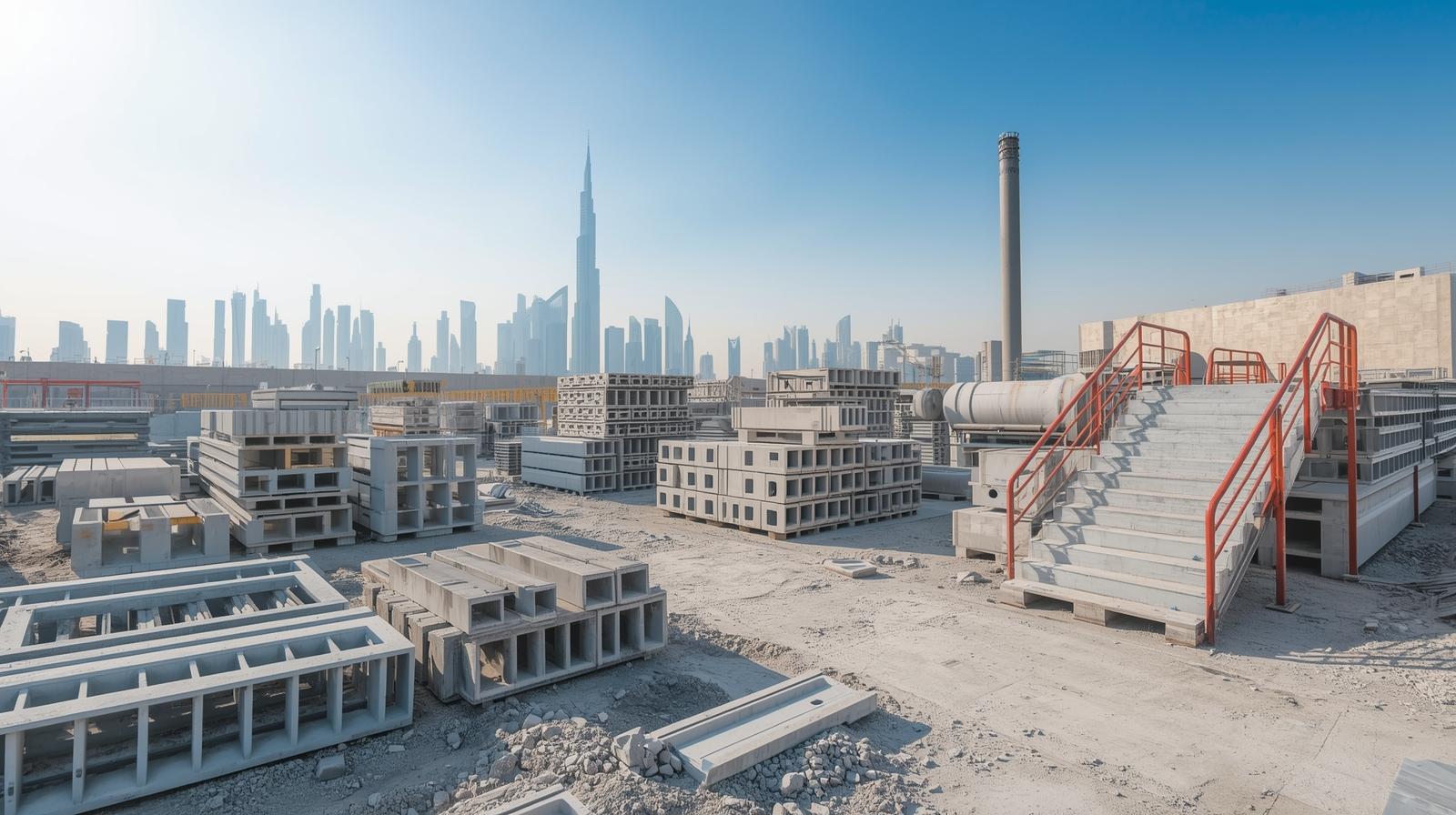
Dubai’s development from desert to a center of innovation and architecture is astounding. Every year, more and more projects are lining up, and as each one is completed, the Dubai skyline is being etched with an innovative, futuristic signature. What is hidden from the public’s view of the skyline, however, is the construction ecosystem of Dubai’s buildings. The construction is done with extreme precision and speed, and employs sustainable engineering. It’s the use of precast concrete technology which is leading construction to new heights and sustainablity. Today, precast concrete Dubai solutions for residential and commercial centres, infrastructure and iconic mega projects have re-defined.
The use of concrete technology offers durability and reduces construction time, which makes it the precursor of construction in Dubai, which is continuously evolving to meet the customers’ needs. The quality of construction is consistent as targets are being met. This is true for industrial areas and highways, and for residential buildings, towers, and high-rises.
The construction that lasts for decades with little distress is also being used in the buildings of Dubai. Learn about HPI Precast UAE which also constructs and distributes concrete technology.
Understanding Precast Concrete Technology
As demand for advanced building systems grows, more developers are turning to precast concrete Dubai solutions for efficiency and long-term performance. Precast technology involves manufacturing concrete components within a controlled factory environment before transporting them to the project site for installation. This process allows precast concrete companies in UAE to achieve exact specifications, reduce on-site labor, and maintain consistent quality throughout production.
Modern precast plants rely on automated casting systems, precision moulds, advanced curing chambers, and cutting-edge monitoring tools. These technologies ensure that each slab, panel, beam, or column meets high structural and architectural standards. Since the production happens indoors, factors like heat, humidity, and dust—which are common on UAE construction sites—have no impact on the final product.
Once manufactured, the units are transported and installed using cranes, enabling fast assembly with minimal disruption. Whether used for large-scale developments or specialized architectural features, precast technology ensures a smooth installation process that aligns with Dubai’s fast-paced project timelines.
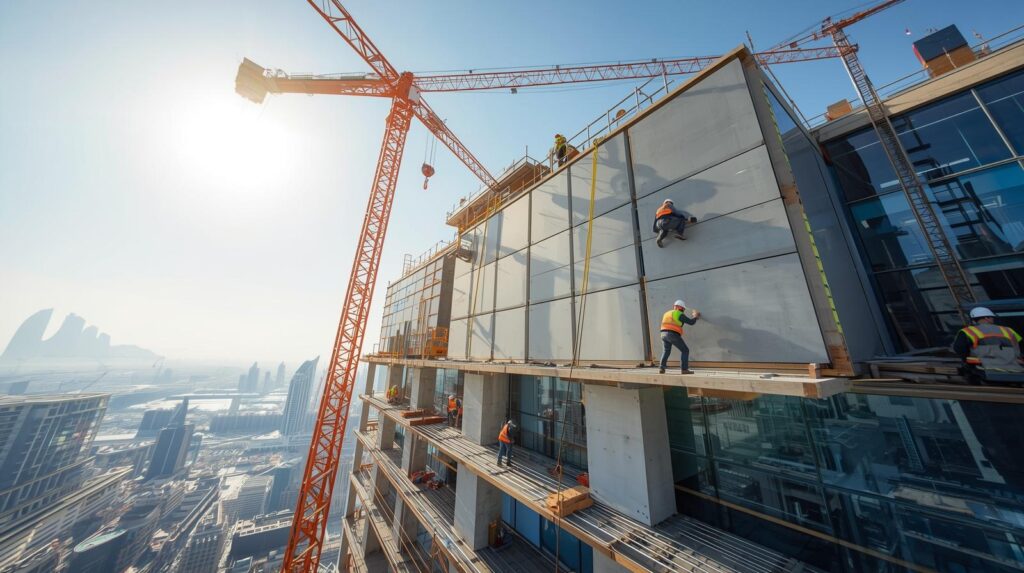
To fulfill the increasing demand for sophisticated building systems, more contractors are using precast concrete Dubai for efficiency and long-term performance. Within the technology of concrete precasting, the components are manufactured off-site in a controlled factory setting and installed on the construction site. In this manner, precast concrete companies in UAE can give exact specifications, decrease on-site labor, and quality consistency throughout production.
In modern precast plants, fully automated casting systems are used in conjunction with computer-controlled, high-precision casting moulds, cutting-edge thermal control systems for post-casting curing, and sophisticated systems for quality control and real-time monitoring of the production and curing process of the concrete. Since the production happens indoors, unlike construction sites, external factors related to Heat, UAE’s construction site humidity, and dust are kept away from the production.
Upon production, the concrete units are quickly assembled with minimal hassle and site disturbance, due to the use of cranes for transport and installation. Whether for large stock building projects or particular decorative concrete elements, Dubai precast concrete technology provided construction with off-site factory construction. The well-recognized value of modern precast construction is the primary reason for the increasing use of precast concrete systems in a city where construction is made with efficiency and modern sustainable design is a high priority.
Benefits of Using Precast Concrete in Dubai Projects
The shift toward precast systems is driven by well-established advantages, especially in a city where efficiency, sustainability, and aesthetics must work hand in hand. When discussing the advantages of precast buildings, most experts highlight the method’s consistency, durability, and environmental benefits which perfectly match Dubai’s construction goals.
1. Precision and Superior Quality
Precast elements are designed and produced using strict quality control measures. With advanced moulding and automated processes, developers get consistently accurate components, eliminating many risks associated with on-site casting. This precision is especially valuable for high-rise buildings, commercial complexes, and large residential communities.
2. Faster Construction Timelines
Speed is one of the strongest advantages of precast technology. While foundation work is being completed on-site, production of walls, slabs, and structural components happens simultaneously at the factory. This parallel workflow significantly reduces project duration and supports Dubai’s fast-moving construction cycle.
3. Sustainable Precast Construction
Sustainability has become a priority across Dubai’s development plans, and precast plays a vital role in achieving environmental goals. Factories optimize material usage, reuse moulds, and minimize waste. Controlled curing results in stronger concrete that lasts longer, reducing maintenance requirements and lifecycle costs. Additionally, precast installation reduces dust, noise, and emissions at the job site.
4. Enhanced Durability
Dubai’s climate presents challenges such as high temperatures, humidity, and saline conditions near the coast. Precast concrete offers superior durability due to its dense structure and controlled production, reducing issues such as cracking, corrosion, and long-term degradation.
5. Reduced On-Site Labor
Precast systems limit the number of workers required at the construction site, improving safety and reducing logistical complexity. Fewer delays, fewer accidents, and more predictable project timelines make it a preferred method for large-scale developments.
Explore our Precast Products for customizable precast components.
Precast Concrete Applications in Dubai Infrastructure
The versatility of precast concrete has made it a cornerstone of Dubai’s construction landscape. From functional infrastructure to architectural projects, precast companies in Dubai have played a major role in delivering long-lasting solutions across various sectors.
Residential Villas and Housing Communities
Dubai’s growing suburban communities rely heavily on precast walls, slabs, staircases, and boundary walls. Developers prefer precast because it speeds up construction while ensuring uniform quality across hundreds of units.
Commercial and Industrial Facilities
Warehouses, logistics hubs, factories, and retail complexes benefit from precast’s ability to handle large spans and heavy loads. The structural strength and fire resistance of precast concrete make it ideal for these high-demand environments.
High-Rise Buildings
Although high-rise towers are often associated with steel construction, precast elements are widely used for partitions, façade panels, and structural components. Precast ensures accuracy, speed, and reduced site congestion—critical factors in densely developed zones.
Parking Structures
Precast is used in Dubai construction for parking structures in malls, office towers, and Airports, as well as other public facilities. Quick assembly and long-lasting hollow-core slabs, beams, columns, and wall panels make up to 90 of parking structures built in Dubai by precast.
Bridges and Infrastructure Works
Networks of roads, pedestrian bridges, and transportation systems’ structure and longevity prove important to rapid installation and minimal interruption to traffic by construction works.
Every project is guaranteed to run on time when you work with a reputable precast company in the uae whether your undertaking a residential, commercial, or civil project.
Conclusion
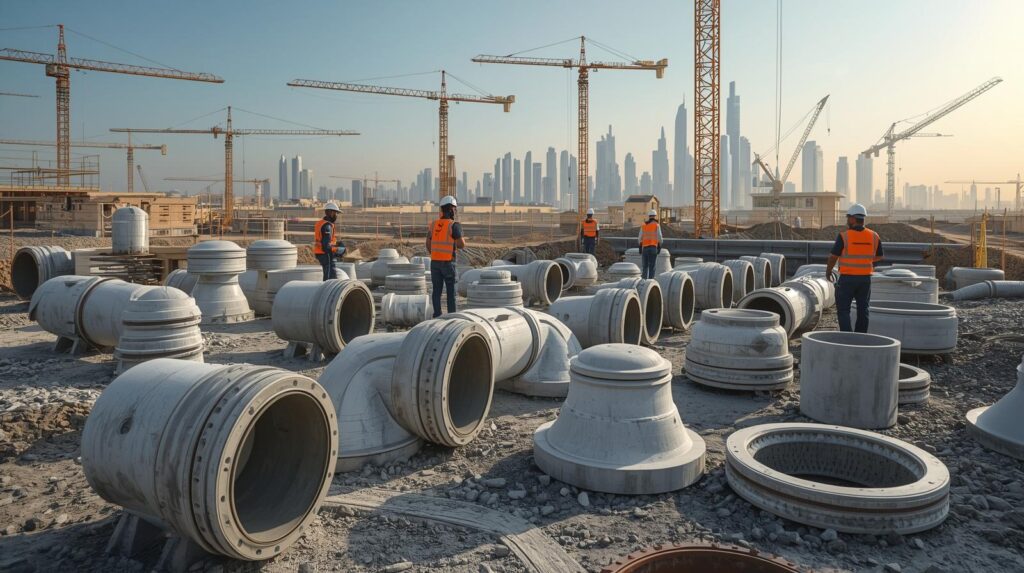
Due to the rapid construction, the increasing geographical size of the city, the expected infrastructure built to environmentally friendly standards, and the expected construction speed, more than other construction materials are expected to be used to build with.
Unmatched speed. Reduced waste. strength. Consistency. Building with precast concrete, construction in Dubai incorporates the long-term vision of the emirate and the most sustainable urban development worldwide.
Innovative urban development abs sustainable as well as sustainable construction without smart solutions. Advancing construction will be a key point for architecture in Dubai, with smart construction with architecture and infrastructure of the precast.
There is a growing demand in Dubai for smart construction solutions. Precast will, as always, be a key point for construction in Dubai.Contact HPI Precast UAE to discuss your next project.
1. What makes precast concrete popular in Dubai?
Precast concrete is widely used in Dubai because it delivers speed, durability, and consistent quality. It also supports sustainable construction practices, helping developers meet environmental and regulatory requirements.
2. Which types of precast concrete products are commonly used in Dubai?
Dubai projects typically use wall panels, hollow-core slabs, beams, columns, staircases, boundary walls, façade panels, and specialized architectural units. These products are manufactured with precision for fast installation.
3. Is precast concrete suitable for Dubai’s climate?
Yes. Precast concrete performs exceptionally well in high temperatures, humidity, and coastal conditions. Its dense structure and controlled curing make it resistant to cracking, corrosion, and long-term deterioration.
4. How do precast companies in Dubai ensure sustainability?
Precast manufacturing reduces waste, uses energy-efficient production systems, and allows for more durable structures. Many plants incorporate recycled materials and advanced curing methods to further reduce environmental impact.